Come and Hug Me (2018)

Merry Christmas!

I got the idea to review something for today a couple of days ago, and set out to find one that was not only horror or thriller, but also worked for this time of year. While I was trying to figure it out I realized there was only one true pick, and that is my personal favorite drama, Come and Hug Me. Instead of doing a traditional review on the drama, I wanted to share some of the reasons and plots that attribute to why this drama is my top drama.

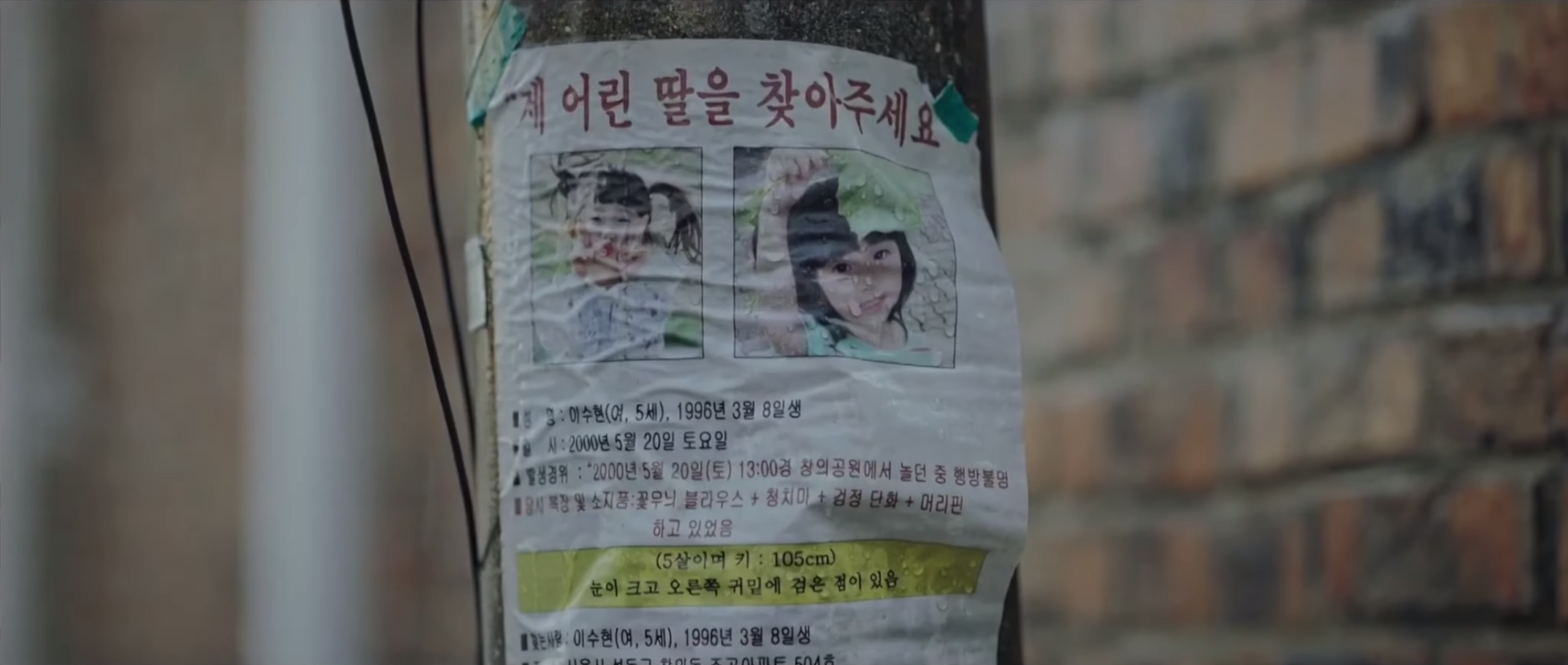
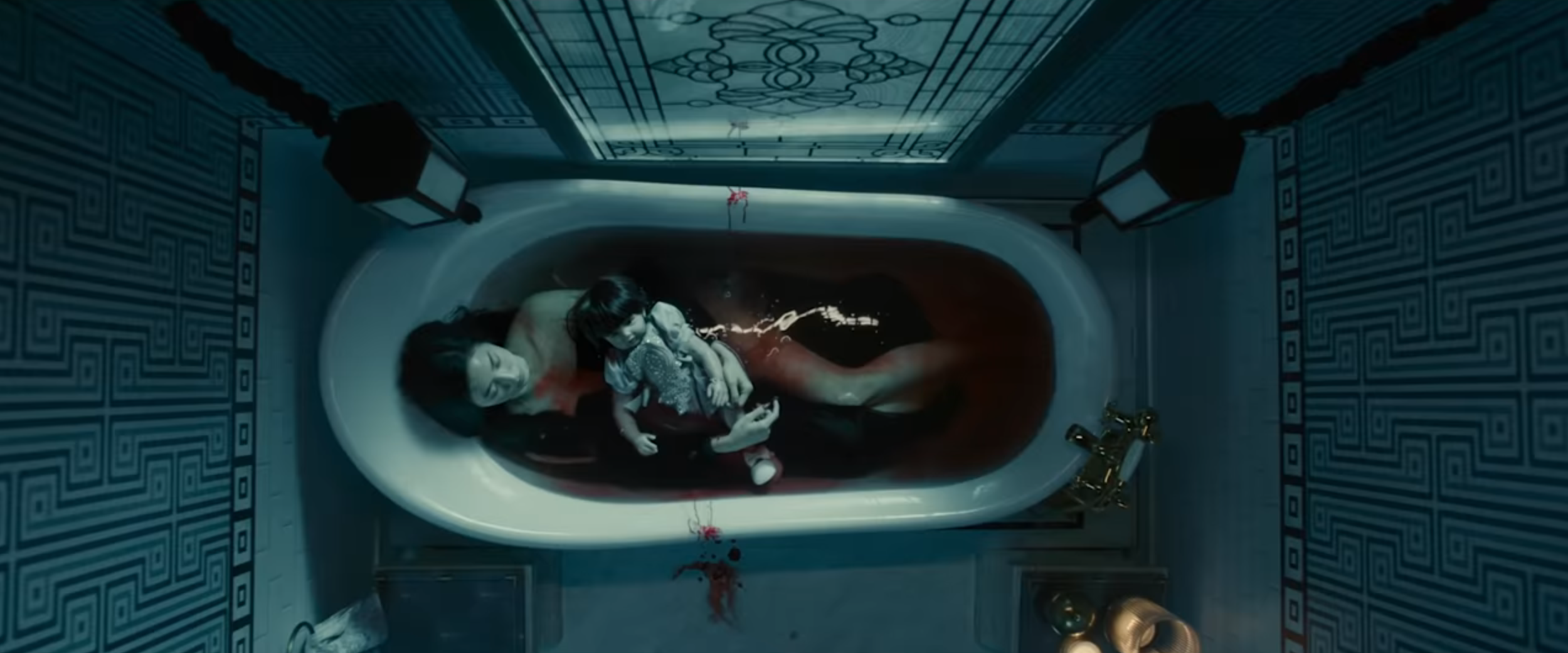
Come and Hug Me is a crime thriller intertwined with a melodrama and gives a look at how the world perceives crimes and the family members of the people who perpetrate those crimes, as well as the effects they and the family members had. But at its core, it focuses on families. What it takes to be a true family and how that looks different to different people, and that blood family isn’t the only family that matters. The drama stems from one significant event that happened in the childhood of the two main leads, Namu (Jang Ki Yong) and Nak Won (Jon Ki Joo). Namu’s father murders Nak Won’s parents in front of her, and almost kills her but is stopped by Namu.

While the drama is about that and their relationship, it weaves through the aftermath of that incident as well as the reintroduction of that trauma when Namu’s father (played hauntingly by Heo Joon Ho) writes a book about the murders of all his victims bringing the case back into light after almost ten years. The drama focuses on the discussion of whether evil is made or created. Hui Jae spends his time focusing on his son, thinking he could create the evil that he is, the public shame and belittle Namu and his family labeling them because of their association with Hui Jae. Journalists spin stories to support that narrative, confirming to the public that those prejudices must be true, while the main characters are constantly fighting that stigma.

It’s an interesting study on how psychopaths can see no wrong and lack compassion, empathy, and understanding - all traits the father has - and how it applies in various ways with others in the drama: the reporters, the public, the victims’ families. The drama connects the actions of the father with the public’s response to show the real damage that can be caused to people, and how close everyone truly is to evil even when they aren’t related to that evil. When the perception is changed, the understanding will follow, and the drama tries to show the characters as they start to understand their biases. There is this great scene when the police officer Go Yi Seok, who was assigned to the case right after the murders and is looking after Namu, sees Chae Ok Hee (Namu’s stepmother) comes to take him in. He mentions something along the lines of the job making him hate and give up on people, but seeing the compassion of Ok Hee to him gave him hope. We see it happen again with the reporter Han Ji Ho seeing the relationship between Namu and Nak Won and how they hold each other up even in great sadness and burden and that even in her position as a journalist on the case, she doesn’t know all the details.

“Evil shall not wait to be proven. Evil shall prove itself.” - Hui Jae

Watching the drama a second time I didn’t realize the way they framed Namu was intentional in ways that were not what I initially thought. The drama leads one to believe it is focused on Namu as if he is a ticking bomb and at any point can stray from being good. He will somehow mess up and follow the footsteps of the father. When in fact the drama tells us clearly that it won’t happen. He’s proven numerous times with his actions and interactions with others throughout his entire life that he is not like his father, and that there should never be any doubt. The drama forces the viewer in a position of doubt even when clear information is given, showing that not only are characters in the drama susceptible to this negative thinking, the viewer is as well. It’s a neat use of that element, as it works to further the intent of the drama, but also plays up some of the thrilling aspects of the drama. It also furthers how the act of just believing in people and helping them at their lowest can turn them to the right path. Nak Won’s constant reassurance to Namu, Ok Hee (wounded) forcing herself inbetween Hyun Mo (Kim Kyung Nam) and the father’s wrath to save him. Even when Namu is about to hurt his father, it’s nothing comparable despite what the father tries to make him believe.

The stigma against non-blood-related families is prevalent everywhere, and the drama handles it beautifully. Nak Won and Moo Won (Yoon Jong Hoon) share true feelings for each other as siblings, being raised to just accept that they are family realistically and comfortably without burden. Seo Jung Yeon’s Ok Hee is my favorite kdrama mother having compassion and strength to take in not only two boys who were not hers, but the product of her failed and horrible marriage, and does so with loving arms. And while she falters a tiny bit at the beginning, she immediately sees the error of her ways. The little sister So Jin (Choi Ri) always views the two as her brothers, never questioning it or changing that stance no matter how distant they treated her. While the drama is on the surface about the murders and the two’s love story, the drama focuses on these other relationships as much as they do with the love story between the two and doesn’t try to take away from those essential storylines with those relationships. Even at the end, we see them confront their past selves to begin their journey in full healing and love in their relationship with themselves.

I can’t get enough of this drama, and this rewatch solidified my love for it as well as its position as my top drama. It’s everything I could want in a drama and more and I felt the same after seeing it again as I did the very first time I watched it. I don’t go over even half of the elements that make this drama great in this post, not mentioning other technical elements or favorite characters, this is just a glance at my love for it. I may return to at another point to give a tigher review. If you haven’t given the drama a try, maybe now is the time.

+++

100 (Asian) Horror Movies in 92 Days

This year I did the Spooky Sarah Says challenge to watch 100 horror movies in 92 days. The challenge started in August and ran till the end of October. The rules were simple: watch 100 new (to you) movies during the time period. When I decided to do the challenge, I was in the middle of watching a lot of Korean horror and had just started planning my October posts. Because I knew that I was already going to be watching a bunch of Asian horror, I decided to do the challenge with a focus on only counting Asian horrors. I started off just tracking movies, but as I got into October I feared that the challenge was forcing me to focus on movies too much, and added tracking dramas into the mix. In the end, it didn’t really work out and I barely touched dramas. Such is life.

I thought it would be fun go through the movies and dramas I watched and check out some of the stats on them to see how the challenge went (besides whether I completed it or not). I also think it would give a greater look into what I chose, and may help in the movies that I choose from here on out. I didn’t try to vary up my content that much, I was mostly concerned with the number, but towards the end when I was less concerned about hitting 100 I started to really try to expand what movies I was watching.


The Stats

-My final count was 116. 8 of those being dramas. My starting baseline for this is 108 movies, 8 dramas.

-The oldest movie I watched was the 1958 Mansion of the Ghost Cat, from Japan. This was a movie I had no clue about before this challenge and one that I randomly picked up. It was a YouTube suggestion after another movie I had been watching and decided to give it a try after realizing that I was enjoying a lot of the older Japanese horror movies I was encountering. The newest movie I watched was Ouija Japan. Its premiere date is listed as October 19th, and I watched the day it dropped on Amazon Prime.

The years in between the oldest and newest least of my worries when picking, mostly because it would be the thing I have the least control of or care due to my options to watch and not having a budget to buy or rent new movies. I did want to see if I somehow favored a year. I assumed that they would mostly be older just purely because I was watching movies on streaming services and assume those would be the cheaper to get rights for thus populating my options. At a tie for first place with 9 entries each was 2009 & 2016. I don’t know how 2009 got to be so high - maybe it was just a good year for horror to come to the box office? I would like to dive deeper into this when I get the time, I would assume that the previous years had popular box office hits that reignited the passion to ride on that popularity or focus distribution rights budget on them. 11 out of the 33 years represented have only one movie or drama watched within them, a much higher number than I would have expected.

-I’m not much of a fan of rating things, and thus rate things extremely weird. Since most of the time I’m rating dramas, I've gotten used to my rating score over there. Problem is…it doesn’t necessarily translate to movies. With dramas I drop them and not rate if I do, that means that I rarely will have a low-rated drama and I’ve worked that into my rating system. With movies, I rarely drop due to their length being a smaller time restraint. I did want to include some stats on my ratings, though. Generally, my rating thought process was 5’s: perfect, 4/4.5’s: all-around great, 3/3.5’s: pretty good 2/2.5’s: not the best, but didn’t hate everything, 1/1.5’s: mostly sucked, .5’s definitely sucked.

Here’s the breakdown of each rating:

  • .5: 7

  • 1: 6

  • 1.5: 7

  • 2: 19 (1 drama)

  • 2.5: 11 (1 drama)

  • 3: 30 (2 dramas)

  • 3.5: 13 (1 drama)

  • 4: 21 (2 dramas)

  • 4.5: 2 (1 drama)

  • 5: 0

I didn’t rate any movie or drama a perfect 5, but I did give a 4.5 to one movie and one drama. One Cut of the Dead was the movie. It is the best movie that I watched during this time, and truly one I had on my watchlist for way too long. If you haven’t watched it yet, don’t read anything about it and watch it knowing nothing. The drama was The Guest. Fantastic drama that was also one I kept putting off not because I didn’t want to watch it, I just didn’t make the time to.

Some other interesting data from my ratings: 2 out of the 3 Indonesian films I watched got .5 stars, the lowest rating based on percentage. All three of the top dramas were Korean. Korea also dominates the 4 stars section. I gave out the most 3 stars (26%) which roughly translates to middle of the road in my enjoyment level, fairly average but possibly had some better than average aspects. I also gave out a fairly large percentage of 2 stars, about 17% of the movies. I was kind of expecting my 1.5/.5 ratings to be a bit higher than they actually turned out. Not because I think I am a ruthless rater, but simply because of the movie pool I was picking from. A lot of the time I would turn on movies at random on Tubi leading to more of a gamble if the movie was good or not.

-Out of all the data I was most interested in seeing was my breakdown of movies based on location. Again, I didn’t try to vary this at the beginning between the Korean Summer Horror posts and the 31 Days of Asian Horror posts constraints. Here’s the breakdown:

  • Cambodia: 1

  • China: 1

  • Hong Kong: 8

  • India: 4 (2 dramas)

  • Indonesia: 3

  • Japan: 37 (1 drama)

  • Korea: 37 (3 dramas)

  • Laos: 2

  • Mongolia: 1

  • Philippines: 3

  • Singapore: 1 (1 drama)

  • Taiwan: 5

  • Thailand: 9 (1 drama)

  • Vietnam: 3

I pretty much knew that Korea and Japan would make it to the top of the list without guessing. I had the most options from those accessible, and the most that were already on my watchlist. Hong Kong came in fourth, which was the most surprising out of the group. I had some movies lined up because Hong Kong had the most options in vampire movies (a theme for some of my blog posts), but most of the ones I picked up were completely random. Most of the movies from Indonesia, Singapore, and the Philippines were from Netflix which I have found seems to be the platform’s favorite area to pick up Asian horror content from.


I know this data is probably only interesting to me, but I had fun trying to figure out some of the stats and it gave me a good look at how I did. I think it’s an interesting perspective on my viewing habits, and I think in the future will help me try to diversify my viewing a bit more. I might do a break down like this for the dramas that I watched this year to give me a greater look at my drama watching.

If you want to see the full list of movies and dramas, check out my Letterboxd list here, and while you’re there follow me so we can be friends!

+++

November Premieres

It feels like so long since I’ve just done a regular post that’s not a review! November has a lot of dramas premiering, and a lot that I’m personally excited for. It’s going to be a heavy watching month for me, especially with some other dramas that premiered during October.


-The supernatural romance Thai drama Prajan See Daeng will be out today, the 1st, about a boy born cursed to turn into a tiger-man during the red moon, and his journey to try to find the only way he can break the curse.

-Not a new movie, but the 2020 Korean horror The Closet will be available on Shudder today. The film follows a widower who enlists the help of an exorcist to help him find his daughter after she goes missing.

-On the 3rd the cdrama Wisher premieres on iQIYI. The sci-fi thriller tells the story of a mysterious organization that creates an app that allows users to make a wish - if they do the assigned task. It is part of iQIYI’s Light On Series, iQIYI produced dramas that are in the suspense genre.

-Also coming out on the 3rd in celebration of Apple TV+ being available in South Korea is the sci-fi thriller Dr. Brain - the first original Korean drama on the platform. It’s director/writer is Kim Jee Woon, known for being the director of the movie I Saw the Devil. I have high hopes for this one.

-While Dead and Beautiful may not be a by-the-book definition of an Asian horror film, it does follow an almost entirely Asian cast and is partially set in Taipei. A group of friends bored with their socialite lives go out for the night…and end up vampires. It’s been making the rounds at film festivals but will be streaming on Shudder starting on the 4th.

-Another older movie, the 2014 Japanese movie The World of Kanako will drop on Shudder on the 5th. The movie follows a former detective who uncovers a secret about his teenage daughter.

-Kdrama Happiness begins on the 5th about a deadly virus that spreads throughout a city, and the apartment building that has been sealed off from it. It looks super interesting, and the team behind it is really good.

-The webdrama Find Me if You Can will premiere on the 9th about a four-way love…square? And a stalker who is obsessed with the main female lead. The drama will star almost the entirety of the kpop group ASTRO.

-Korean horror drama Hellbound drops all of its episodes on Netflix on the 19th. The drama is about people being able to hear predictions on how they’ll die and are able to see the death angel in front of them. Director/writer Yeon Sang Ho is known for Train to Busan. This is one of my top dramas this month.

-Taiwanese drama Light the Night will be streaming part one on Netflix on the 26th. Set in 1988 Taipei Red Light District about the lives, love, and struggles of the club madam, and their hostess ladies.

-On the 27th the kdrama One Ordinary Day premieres. The drama is about the murder of a woman, and the person in jail who might not be the culprit. It is a remake of the BBC series Criminal Justice.

No Date:

-There hasn’t been much movement or information on the kdrama Goosebumps after some casting news, so there might be a good chance this one won’t be out this month. It’s directed by Gonjiam: Haunted Asylum director Jung Bum Shik so I’m interested and hopeful it’ll appear.

+++